
Editor's Note: This article was originally published in 2007, following a landmark play conference at The Strong National Museum of Play. While nearly two decades have passed, the research, conversations, and convictions captured here remain as relevant and urgent as ever.
We all know that play matters. However, nothing reinforces this point more than a national conference bringing over 100 experts from the USA and throughout the world together to share their expertise, research, theories, and implementation practices of play. This was the 2007 National Conference for the American Association for the Child's Right to Play (IPA/USA), and The Association for the Study of Play (TASP). To add to this high level of enthusiasm, the conference was located in Rochester, N.Y., home of the Strong National Museum of Play.
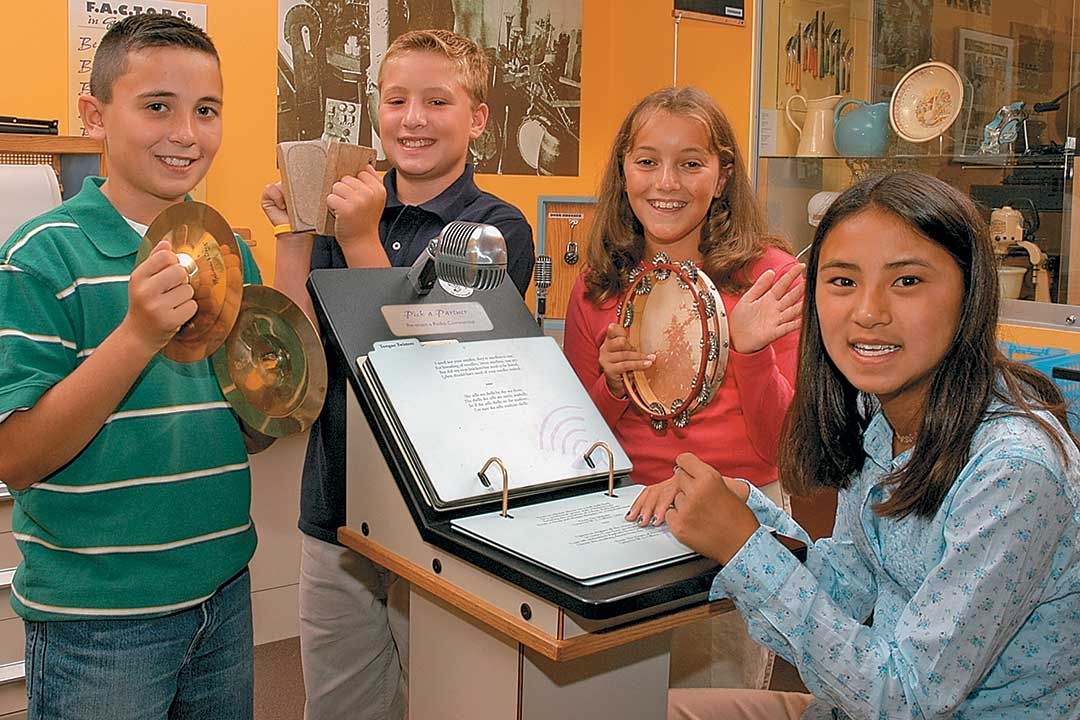
The Strong National Museum of Play is the only museum in the world devoted solely to the study of play as it illuminates American culture. Truly a remarkable accomplishment of planning, design, and creativity, the museum has more than 6.5 acres of floor space and houses in excess of 500,000 objects, including the nation's most comprehensive collection of toys, dolls, games, and other play-related artifacts. All exhibits and programs are grounded in the Theory of Multiple Intelligence ensuring a high level of hands-on and interactive experiences for children beginning at age two through playful adults.
To get a sense of the museum's size, it houses a 7,000-square-foot Field of Play exhibit allowing participants to examine six different elements of play, a 12,000-square-foot Reading Adventureland resembling a large pop-up book, an 8,000-square-foot Discovery Garden, a 2,500 square-foot Dancing Wings Butterfly Garden that is actually designed to look like large butterfly wings from the outside, a replica of Sesame Street main street, a large food court, two museum stores, and an 80,000-volume Research Library and Archives. It also includes the well-known National Toy Hall of Fame, among several other large-scale exhibit areas. It is no surprise that the museum draws nearly 500,000 visitors annually.
During the three-day conference, more than 100 experts used this amazing setting to deliver information that contained the most contemporary strategies and the latest research on play at the time. Topics included ways to transform public green spaces for play; how to awaken a child's creativity, literacy, math, and science skills through play; understanding play activities across numerous cultures; expanding on the healing and therapeutic benefits of play; the latest insights on play props, playthings, and playground construction; as well as a full range of discussions and suggestions concerning how to restore play in childhood through greater play advocacy.
Conference planners were honored to bring together three expert keynote speakers. Dr. Joe Frost, the country's most highly published early childhood education play expert, spoke on the topic of The Evolution and Diminution of Children's Play and Recess. Dr. Brian Sutton Smith, a renowned researcher in the area of psychology and play, gave an address entitled, Playas Emotional Survival. Dr. Doris Bergen, who has been acclaimed for her scholarly books and early childhood research, presented on the topic of Play, Toy Affordances, and Brain Development: Hints from Research. The messages from these prolific speakers carried through in the hallways, during lunch times, and several museum tours offered by the conference host.
Perhaps the greatest message for playground enthusiasts came during the conference's large-scale banquet held at the Hyatt Regency in downtown Rochester. Tina Nocera, from Parental Wisdom, gave a strong message about the need to educate parents concerning the lifestyle of today's children and the value of supporting playspaces for kids.
Nocera shared information on her work with parents throughout the country. This allowed conference participants an opportunity to understand why parents aren't listening to messages on the value of play. Then she said, today's parents are so worried that their children are going to miss out on something needed for adulthood that they actually do miss a vital element, and that is the importance of childhood.
Nocera also conveyed numerous reasons why parents perceive play as a four-letter word. She discussed how parents are under enormous pressure for their children to be successful, so babies are placed in front of Baby Einstein DVDs, which is actually ironic since Albert Einstein spoke late and did poorly in school. She conveyed, If Einstein were a young kid today, he'd be on Ritalin, and we'd still be waiting for the theory of relativity. A major problem is that competition drives today's parents, whether it's about which child on the playground walks first, utters words by a certain age, secures a spot in the finest preschool, or has his/her name appearing on an academic honor roll.
Nocera also reflected that there is a crippling fear associated with kids playing outside. To compensate, parents keep their children happy with computer games, television sets, and video games. They also schedule playdates and adult-organized sports. Once again, the child is listening to an adult and is missing valuable lessons learned on the playground, like sharing, negotiating, and even losing. This is why kids can t start a pickup game of baseball: they don't know how. Parents further rationalize over-scheduling their children by telling themselves that life moves fast today, and kids have very limited attention spans. She questioned that judgment and added, When have you ever heard a two-year-old tell you it's time to leave the playground? Perhaps we need to rethink who really has the attention span problem. Nearly two decades later, Nocera's words feel even more prophetic.
Needless to say, the audience strongly agreed.
WHY PLAY?
MEMOIR BY JOYCE BECK, M.Ed.
My childhood is a faraway memory. So why do I gaze with longing as I pass by a playground? Perhaps it is there that I first experienced the principles that lead to a happy life.
From the slide, I learned effort. After patiently waiting in line and climbing step-by-step, I could expect to see a glorious view from the top and to have a thrilling ride to the earth beneath.
From the monkey bars, I learned perseverance. When the goal seemed just out of reach, I could fight through the pain and fatigue and claim victory! From the see-saw, I learned cooperation.
By helping a friend go up, I could know that in time, a friend would also lift me up. From the merry-go-round, I learned bravery. As the world spun around me, I took courage, knowing I could step off at any time and again be firmly planted on solid ground.
From the swing, I learned comfort. Although too big to be cradled and sung to, I could relive Mother's gentle rocking while listening to the lullaby of Mother Earth, the birds, the wind, the bees.



Comments
Add new comment