
You built the playground. The kids love it. Now you're thinking bigger.
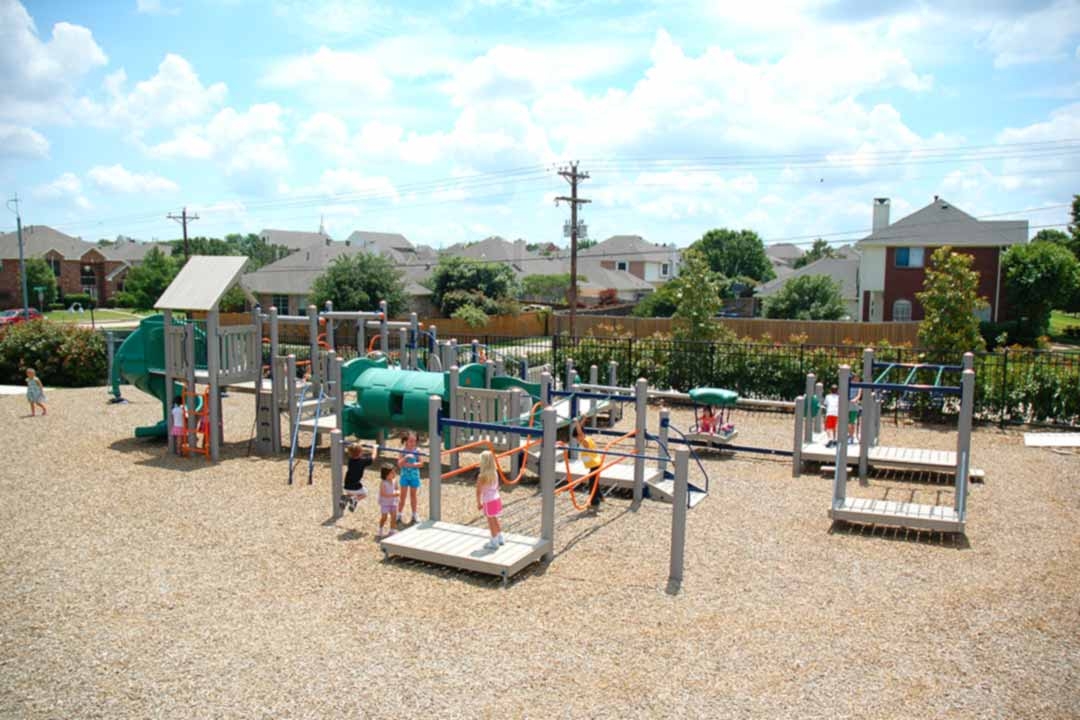
Maybe enrollment has grown. Maybe the original equipment is aging. Maybe you've watched kids line up for the slide and thought — we need more. Whatever the reason, expanding an existing playground is a smart investment. But it's not as simple as ordering a new structure and bolting it on. There are safety standards, spacing requirements, and surfacing considerations that can turn a well-intentioned upgrade into a compliance headache if they're overlooked from the start.
Here's what you need to know before you break ground.
Start with Use Zones — Not the Equipment
Before you even look at a catalog, you need to understand use zones. A use zone is the area surrounding a piece of play equipment where a child might land if they fall, jump, or exit a piece of equipment. According to ASTM F1487, the Standard Consumer Safety Performance Specification for Playground Equipment for Public Use, use zones must be free of obstacles — other structures, fences, benches, walkways, or any fixed hazard.
For most equipment, ASTM F1487 requires a minimum use zone of 6 feet in all directions from the perimeter of the equipment. For swings, that requirement extends to twice the height of the pivot point in front and behind the swing, and 6 feet to each side. Slides have their own use zone requirements based on the height of the slide exit.
The critical point for expansion planning: use zones from two separate structures cannot overlap. Every new piece of equipment you add must have its own complete, unobstructed use zone. This is where many well-meaning playground expansions go wrong — the space looks adequate until you map out the actual zones and realize structures are too close together.
Get a Clearance Measurement Before You Order Anything
Walk your existing playground and measure the available space carefully — not just the open ground, but the actual usable space after accounting for existing use zones. The Consumer Product Safety Commission's Handbook for Public Playground Safety (Publication No. 325) recommends documenting your existing layout before planning any expansion. This gives you a realistic picture of what you can actually add, and where.
If your playground serves children in multiple age groups — typically 2–5 and 5–12 — remember that ASTM F1487 recommends separating equipment by age group, either through distinct play areas or adequate spacing. An expansion is a good time to evaluate whether your current layout is serving both groups appropriately.
Check Compatibility Before You Mix Manufacturers
Not all playground equipment is designed to connect to or coexist with equipment from other manufacturers. If you're interested in adding a structure that attaches to or links with your existing equipment, contact both manufacturers before purchasing. Ask specifically whether their systems are compatible, whether any modifications would be required, and whether those modifications would affect the original structure's warranty or certification status.
If you're adding a freestanding component rather than an attached one — a spring rider, a standalone climber, a sensory panel — the compatibility question is less critical, but spacing still is. Every freestanding component needs its own complete use zone, and you need to factor that space into your layout before purchase, not after delivery.
Don't Forget the Surface
This is the most commonly overlooked part of a playground expansion, and one of the most important. Safety surfacing — engineered wood fiber, poured-in-place rubber, rubber tiles, or loose-fill materials — must extend throughout the entire use zone of every piece of equipment. When you add new equipment, you're adding new use zones, which means you're adding new surfacing requirements.
ASTM F1292 governs the impact attenuation of surfacing materials. The surfacing must provide adequate protection at the critical fall height of the equipment — generally the highest designated play surface — and must be maintained at the proper depth or thickness. If you're extending an area covered by existing engineered wood fiber, plan to add material to maintain proper depth across the expanded zone. If you're adding a new zone that connects to an existing surface, make sure the materials are compatible and that transitions between zones don't create tripping hazards.
Consider a Professional Assessment
Before finalizing any expansion plan, consider having your existing playground assessed by a Certified Playground Safety Inspector (CPSI). A CPSI can identify existing compliance issues you may not be aware of, measure use zones accurately, evaluate surfacing depth and condition, and help you understand what a proposed expansion would require to meet current standards.
This step is especially valuable if your original playground was installed more than five years ago, since ASTM standards are updated periodically, and requirements may have changed since your original installation.
The Bottom Line
Expanding a playground is one of the best investments a school, park, or community organization can make. More varied play opportunities extend the life and relevance of your entire play space — but the planning has to start with safety. Get the use zones, spacing, surfacing continuity, and equipment compatibility right, and everything else follows.
This article was updated and expanded from a piece originally published in the August 2007 issue of Today's Playground Magazine. The original article appeared as part of a buyer's guide to playground equipment and inspired this deeper look at the safety standards that govern expansion planning. Much has changed in playground safety standards since 2007 — but the fundamentals haven't.



Comments
Add new comment